Upholstery Cleaning
Refresh sofas, sectionals, armchairs, and suitable furniture fabrics. Cleaning methods are selected after inspecting fabric composition, construction, and manufacturer care requirements across Barrie and Simcoe County.
Suitable Furniture & Fabric Considerations
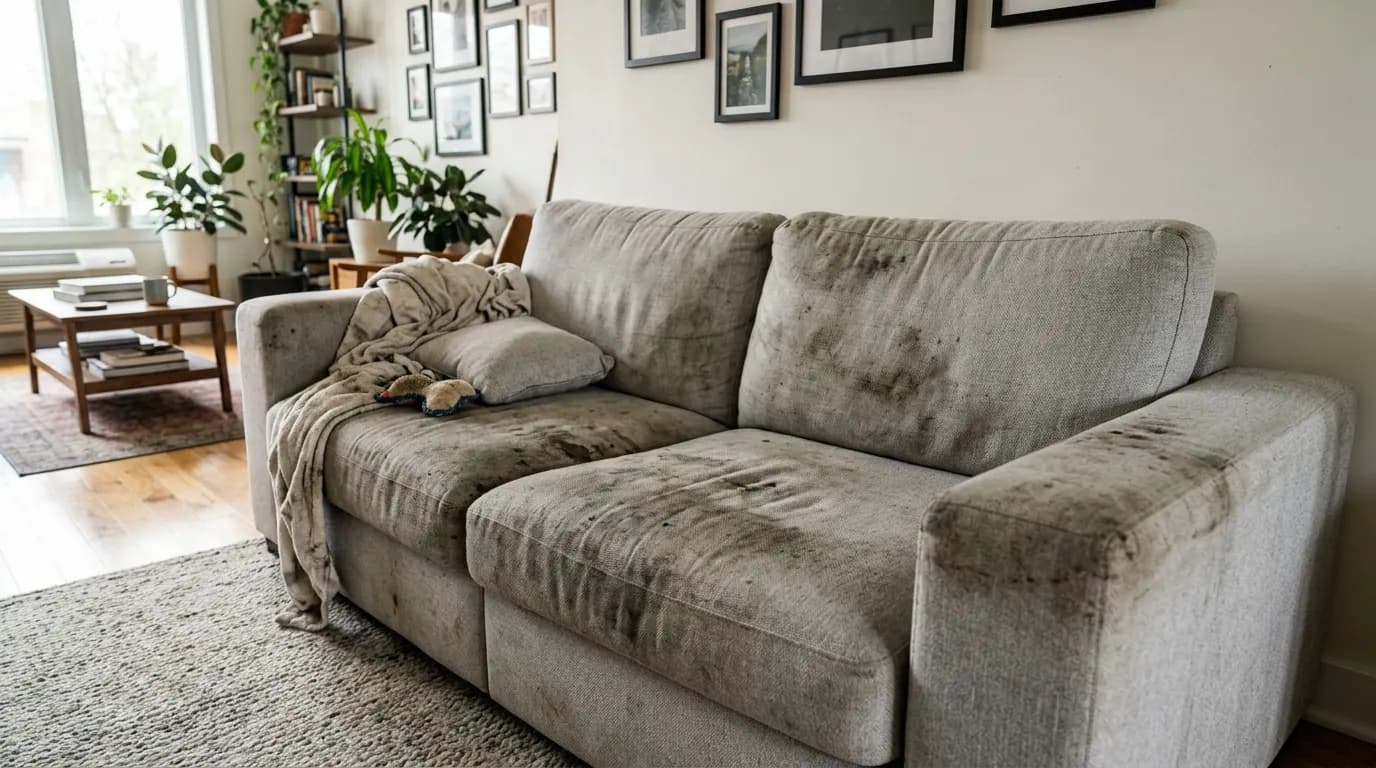
Upholstered furniture requires individualized care based on weave, fibre content, and construction. Cleaning suitability is confirmed after inspecting care codes (W, S, WS, X) and fabric stability:
- Living Room Sectionals & Sofas: Fabric couches, loveseats, and modular sectionals subjected to daily family use.
- Armchairs & Recliners: Reading chairs, upholstered recliners, and footstools.
- Dining Room Seating: Fabric-padded dining chairs with food and drink spots.
- Office Seating: Desk chairs, waiting room armchairs, and executive seating.
Fabric Inspection & Extraction Method
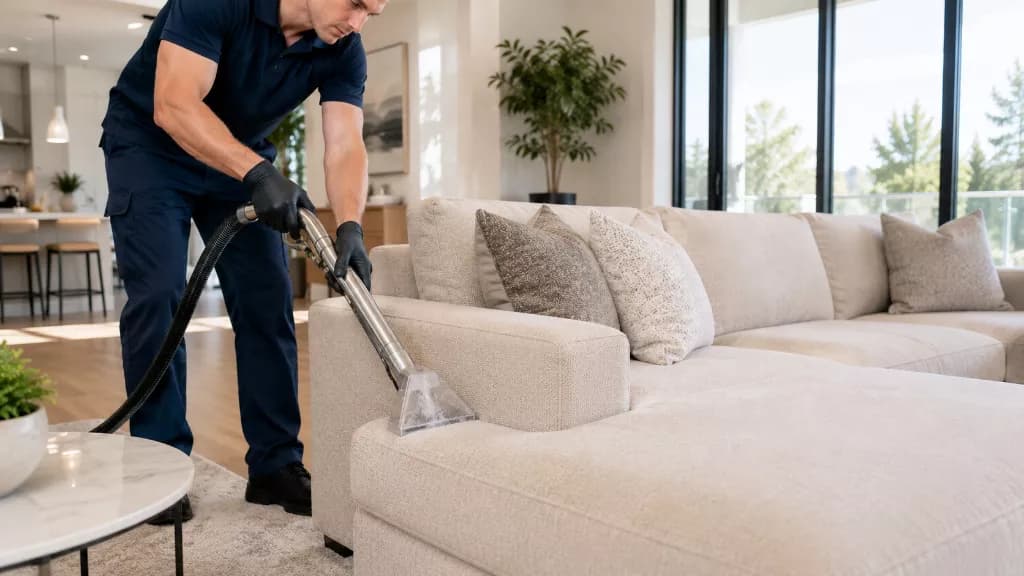
Upholstery fabrics vary widely in construction and backing. We inspect care labels and test colorfastness before selecting an appropriate cleaning solution and extraction pressure.
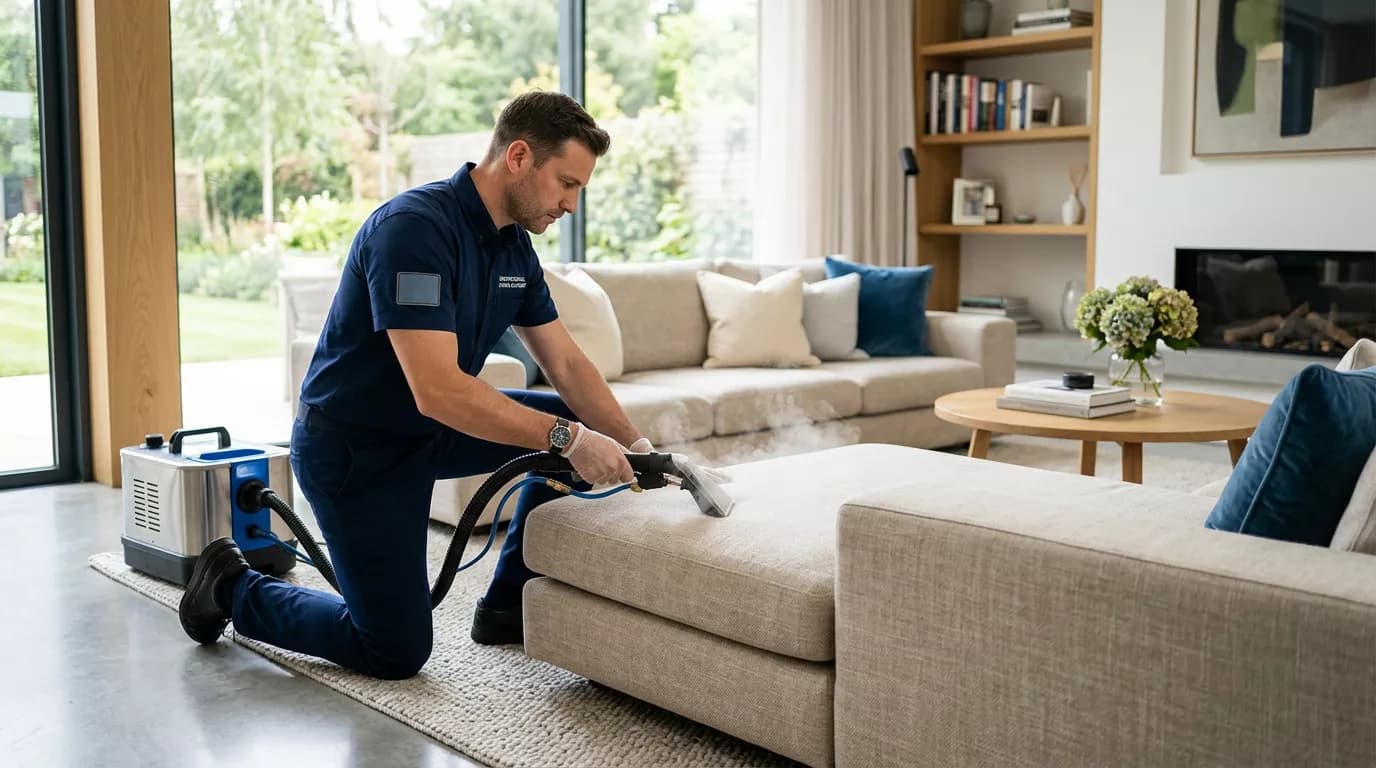
Using controlled moisture upholstery attachments, a fine mist of conditioning solution is applied and extracted under vacuum suction to clean the fabric face while minimizing water penetration into cushion padding.
Factors Affecting Results & Outcome Limitations
Upholstery cleaning outcomes depend on fabric composition, stain age, and pre-existing wear:
- Synthetic vs. Natural Fibres: Synthetic microfibers and polyesters clean well with wet extraction. Delicate natural fibres (cotton blends, linen, rayon) require lower moisture and neutral pH.
- Body Oil Saturation: Headrests and armrests absorb skin oils over time. While cleaning yields noticeable improvement, oxidized oils may leave subtle shading.
- Fabric Wear & Pilling: Friction from daily use causes surface fuzzing (pilling) or fibre thinning that cannot be repaired by cleaning.
Professional Care vs. Household Spotting Hazards
Attempting to clean furniture with aggressive consumer spotters can cause permanent damage:
- Water Rings: Excess water pooling in cushion foam can migrate outward as it dries, leaving mineral rings on delicate fabric faces.
- Dye Bleeding: High-pH cleaners can dissolve unstable dyes, causing colors to run into adjacent fabric patterns.
- Sticky Residues: Unrinsed soap left in upholstery weave attracts fresh dirt and dust.
Preparation, Aftercare & Local Simcoe Context
Proper room ventilation helps ensure prompt furniture drying after service.
Preparation: Remove throw pillows, blankets, and loose items from furniture. Ensure clear walking paths around seating pieces.
Aftercare: Allow cushions to dry completely (typically 2 to 6 hours) before placing throw blankets or sitting on furniture. Running a room fan speeds up drying.
Why Choose Professional Cleaning?
Our advanced extraction methods offer significant advantages over consumer rental machines.
Soil & Oil Extraction
Safely removes accumulated body oils, food spots, and surface grime based on fabric suitability.
Odour Neutralization
Flushes out lingering household odours trapped within furniture fabrics rather than masking them.
Fabric Maintenance
Removing abrasive soil particles helps reduce fibre friction on high-use seating.
Before & After Showcase
Experience the difference of professional hot-water extraction. Drag the slider below to see the transformation.
Setting Realistic Carpet Restoration Expectations
Every carpet restoration outcome depends on specific material factors. Genuine project before-and-after photography will be showcased here as documented cleaning projects are completed.
Stain Age & Chemistry
Fresh spills respond significantly better than older, heat-set, or chemically altered stains.
Carpet Fibre Construction
Synthetic fibres (nylon, polyester) release soil differently than natural wool or delicate blends.
Physical Fibre Wear
High-traffic matting and physical fibre damage alter light reflection and cannot be undone by cleaning alone.
Step-by-Step Restoration
We follow a systematic multi-step approach to guarantee maximum soil extraction and minimal drying times.
Fabric & Care Code Inspection
Checking care labels (W, S, WS, X) and testing fabric dyes for colorfastness.
Dry Vacuuming
Removing loose surface dust, pet hair, and debris from seams and crevices.
Pre-Conditioning
Applying fabric-appropriate conditioning sprays to loosen body oils and surface soil.
Controlled Extraction
Rinsing and extracting soils with upholstery attachments to limit cushion wetness.
Cushion Detailing
Cleaning unattached removable cushions and detailing armrests and headrests.
Drying Setup
Placing cushions in an upright drying position and setting pile orientation.
Common Problems We Solve
Frequently Asked Questions
Answers to your most common questions about our upholstery cleaning service.
No. While synthetic microfibers and sturdy cotton blends respond well to wet extraction, delicate fabrics coded "S" (dry-clean solvents only) or "X" (vacuum only) require dry cleaning methods or cannot be wet-cleaned.
Explore Related Services

Ready to Book Upholstery Cleaning?
Contact SteamX Carpet Cleaning to schedule your professional cleaning service in Barrie and surrounding areas.
Request Your Quote